Your forecast now drives more than purchasing. It shapes cash flow, service levels, warehouse pressure, and customer trust. That matters more in 2026 because supply chains still face tariff shocks, demand swings, and faster planning cycles. McKinsey’s 2025 supply chain survey found that demand forecasting, inventory optimization, and supply planning rank among the top AI use cases, yet only 19% of companies say they deploy AI at scale. That gap creates both risk and opportunity for logistics teams.
The story is no longer about hype. It is about execution. In practice, machine learning helps planners spot patterns that spreadsheets miss, especially when demand changes fast across regions, stores, channels, or SKU groups. What actually works is not a giant moonshot. Teams win when they feed cleaner data into focused models and measure outcomes hard. [source: McKinsey Global Supply Chain Risk Survey]
Why demand forecasting became a boardroom issue
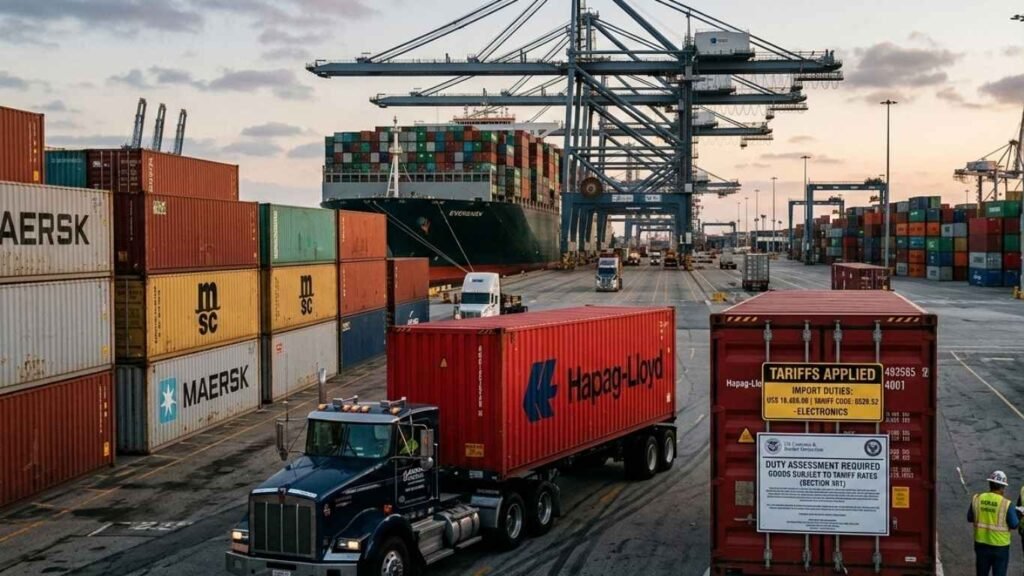
Tariffs dominated supply chain leaders’ attention in 2025, according to McKinsey. That pushed many companies toward tactical inventory shifts and supplier moves instead of long-term transformation. As a result, forecasting now sits closer to risk management than simple replenishment.
McKinsey also reports that AI-driven forecasting can reduce supply chain forecast errors by 20% to 50%. In the same analysis, lost sales and product unavailability can drop by up to 65%, while warehousing costs can fall by 5% to 10%. Those numbers explain why forecasting has moved from the planner’s desk to the leadership agenda.
| Latest signal | What the data says | Why it matters |
|---|---|---|
| AI deployed at scale | 19% of respondents | Most firms still have room to catch up |
| Forecast error reduction | 20% to 50% | Better buying and less waste |
| Inventory reduction | 20% to 30% | Less working capital tied up |
| Fill-rate improvement | 5% to 8% | Better service levels |
What machine learning does better than spreadsheets
Traditional forecasting often leans on sales history and planner judgment. Machine learning can layer in promotions, local demand shifts, weather, supplier signals, and channel data. That gives you a forecast that behaves more like a live traffic app than a paper road map.
This matters most when demand behaves in messy ways. NVIDIA says Tesco’s forecasting setup manages more than 3,000 stores and over 30 million products on a 21-day horizon. You cannot manage that level of detail with static spreadsheets alone.
| Forecasting approach | Main inputs | Best use case | Main weakness |
|---|---|---|---|
| Spreadsheet planning | Sales history, planner edits | Stable, low-complexity items | Misses fast shifts |
| Statistical baseline | Time series only | Seasonal items | Struggles with external signals |
| ML forecasting | Sales, promotions, location, operations data | Multi-SKU, volatile demand | Needs clean data |
Where the results already show up
AWS says Foxconn improved forecasting accuracy by 8% and projected $553,000 in annual savings at its Mexico factory after building a demand forecast model with Amazon Forecast. That is not a theory paper. It is a direct example of forecasting turning into measurable P&L impact.
McKinsey reports that one building-products distributor improved fill rates by 5% to 8% after building an AI-enabled supply chain control tower. In practice, that kind of gain can feel like adding capacity without building a new warehouse.
What still blocks better forecasts
The biggest blocker is not the algorithm. It is fragmented data, weak governance, and poor workflow design. McKinsey notes that many firms still pilot AI without scaling it, while another McKinsey analysis warns that generative AI can make numerical errors in forecasting and needs human verification.
Recent peer-reviewed work also shows that near-term signals often matter more than long-range projections for stockout prediction. That matches what logistics teams see on the ground. Fresh demand signals usually beat stale averages.
| Before rollout, audit this | Why it matters | What good looks like |
|---|---|---|
| SKU and location data | Bad granularity weakens forecasts | Clean item-store history |
| Promotion data | Promotions distort baseline demand | Tagged event history |
| Supplier and lead-time data | Forecasts fail if supply timing is wrong | Updated lead-time records |
| Planner workflow | Good models still fail in bad processes | Clear review and override rules |