
If you are trying to figure out how to get clients in logistics business, you already know that low rates alone will not win serious accounts. Buyers want a partner who can protect service levels, reduce supply chain risk, and communicate clearly when freight conditions change. This guide shows you how to position your company, earn trust faster, and build a repeatable client acquisition system.
In logistics, sales rarely fail because demand does not exist. They fail because the offer sounds generic. When every provider claims fast delivery, competitive pricing, and end-to-end support, buyers stop listening. You win when you speak directly to the cost, visibility, and reliability issues that affect their daily operations.
Takeaways
- Strong positioning wins attention. You attract better accounts when you define the lanes, industries, and service problems you solve best.
- Proof closes deals faster. Buyers trust case studies, on-time performance, communication standards, and execution detail more than broad promises.
- Consistent outreach creates pipeline. The companies that keep winning do not rely on referrals alone. They build a system.
Build a Position That Buyers Can Remember
The first step is to stop marketing yourself as a general logistics company. Instead, define a narrow commercial angle. You may specialize in temperature-sensitive freight, import coordination, last-mile execution, or warehouse-linked distribution. The more specific your promise, the easier it becomes for a prospect to understand why they should speak with you.
Your website, company profile, and sales deck should reflect that focus. Lead with the industries you serve, the shipping challenges you solve, and the outcomes you improve. Buyers respond to clear specialization, operational credibility, and relevant experience. They do not respond to vague capability lists.
This is also where social proof matters. A short case study with shipment volume, transit improvement, or claim reduction performs better than a long company history. Add [Internal link: how to build a logistics case study] and [Internal link: key KPIs for logistics service providers] to strengthen topical depth and buyer trust.
Takeaway: A precise market position makes your sales message easier to understand and easier to trust.
How to Get Clients in Logistics Business by Solving Real Risk
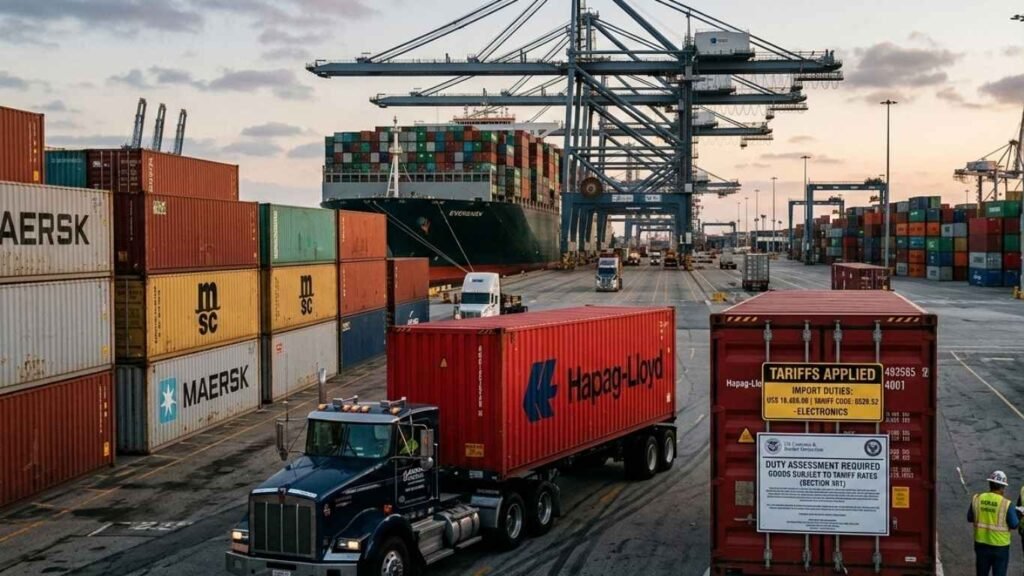
The most effective way to sell logistics services is to frame your offer around risk reduction. Shippers and procurement teams are under pressure to manage costs, avoid delays, and protect service continuity. In a 2025 BCG and Alpega survey, nearly 80% of shippers reported cost increases from tariffs and duties, while more than 50% said they were dealing with longer transit times. That means buyers are actively looking for partners who improve reliability, visibility, and control.
So, when you present your service, talk about what happens after the contract is signed. Explain your escalation process. Show how you handle missed milestones. Clarify your reporting cadence. Demonstrate how your team protects lead times, communicates exceptions, and supports procurement decisions. That is a practical answer to how to get clients in logistics business because it shifts the conversation from price to performance.
You should also align your outreach with buyer pain points. A freight manager may care about dwell time, damaged shipments, and carrier responsiveness. A procurement lead may care about total landed cost, contract reliability, and supplier accountability. When your message matches the problem they already feel, response rates improve.
Takeaway: You win more logistics clients when you sell risk reduction, not just transportation capacity.
Turn Proof Into a Repeatable Sales System
Many companies still depend on referrals, and referrals are valuable. However, referrals alone rarely create predictable growth. If you want a stable pipeline, you need a simple outbound system backed by strong proof assets.
Start with a defined target list. Choose the industries, shipment types, and company sizes that fit your operation. Then create outreach that sounds informed, not desperate. Mention a likely issue such as port delay exposure, poor shipment visibility, or warehouse handoff inefficiency. Offer a short call built around diagnosis, not a generic sales pitch.
In the middle of that process, remember this: how to get clients in logistics business is not about chasing everyone. It is about finding companies whose freight profile matches your strengths, then proving you can improve their operation. That means your sales process should include a short audit, a customized recommendation, and a follow-up sequence tied to real commercial value.
Your content should support that system. Publish short articles on lane risk, carrier management, inventory flow, and freight cost control. Use [Internal link: logistics lead generation strategy] where relevant. Content works best when it supports sales conversations instead of chasing empty traffic.
Takeaway: A repeatable sales system turns expertise into steady client acquisition.
Frequently Asked Questions
How do small logistics companies get their first clients?
Small firms usually win early business through a narrow niche, quick response times, and strong service follow-through. The best approach is to target one shipment type or one industry and build proof there first.
Should you compete on price to win logistics accounts?
Price can open a conversation, but it rarely builds a durable client base. Buyers stay when they see consistent execution, clear communication, and measurable service quality.
How to get clients in logistics business without a big marketing budget?
Focus on direct outreach, referral partnerships, and authority content. If your messaging is specific and your proof is strong, you can win quality accounts without a large ad spend.
What is the best channel for logistics lead generation?
For most B2B logistics providers, the best channel is a mix of LinkedIn outreach, email prospecting, referrals, and search-driven content. The right mix depends on your service model and average deal size.
Takeaway: The best lead generation channel is the one that consistently reaches the right buyer with the right proof.
Conclusion
The real answer to how to get clients in logistics business is not more noise. It is better positioning, stronger proof, and a disciplined sales process that speaks to operational risk. When you define your niche, communicate measurable value, and follow a repeatable outreach system, you stop chasing random leads and start attracting better-fit accounts.
If you want long-term growth, build your sales approach the same way you build a strong supply chain: with clarity, consistency, and control.