Blind spots in freight now cost you more than a late delivery. They can trigger spoilage, theft claims, failed audits, and unhappy customers. That is why real-time cargo monitoring with IoT sensors has moved from pilot programs into daily operations.
BSI and TT Club found that food and beverage loads made up 22% of global cargo theft incidents in 2024, while 76% of thefts involved trucks and 41% happened in transit. At the same time, carriers such as Maersk now give shippers near real-time reefer visibility, even at sea, including temperature, humidity, gas levels, and GPS position. In practice, that changes how you reroute loads, respond to alarms, and prove compliance before a claim turns expensive.
Why live visibility matters more in 2026
The freight risk picture has changed fast. TT Club and BSI say internet-enabled crime now plays a significant role in cargo theft, with criminals using phishing, forged documents, and AI-manipulated freight records. That makes door, shock, light, and geofence alerts more valuable because your team can act while the load still moves.
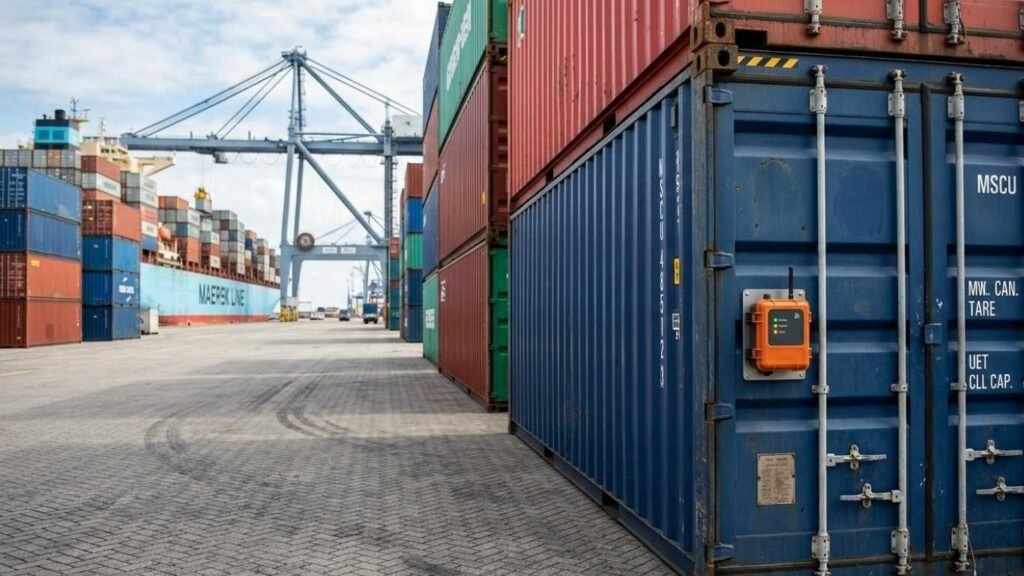
Think of a sensor-equipped shipment like a fitness tracker for cargo. A paper log tells you what happened later. A live sensor tells you when the shipment drifts, overheats, or gets opened at the wrong stop, which is what actually helps operations teams intervene.
| Sensor signal | What it catches | Why your team cares |
|---|---|---|
| Temperature | Reefer drift, cooling failure | Saves product and claims time |
| Humidity or O2/CO2 | Ripening, condensation, ventilation issues | Protects food and pharma quality |
| GPS and geofence | Route drift, long dwell, missed handoff | Speeds response and escalation |
| Door, light, or shock | Tampering, rough handling, theft risk | Supports security and insurance review |
Reefers are showing the future first
Maersk says its Remote Container Management system transmits data from modern reefer containers and networked vessels, letting shippers see near real-time conditions inside the box, even at sea. The company also says this visibility helps customers start release processes before cargo arrives, which can reduce time-to-market and tighten inventory control.
This matters because cold chain failures rarely announce themselves early. A produce exporter or pharma shipper needs the alert before the cargo reaches the port, not after it fails inspection. That is why reefer monitoring now looks less like a premium feature and more like operating discipline.
| Signal that the market is shifting | What recent sources show | Why it matters |
|---|---|---|
| Carrier capability | Maersk now offers near real-time reefer visibility at sea | Live intervention is operational, not theoretical |
| Network trend | A 2025 industry survey found IoT ranked as the top 5G monetization area for 40% of respondents | Connectivity investment is moving toward logistics use cases |
| Trade pressure | Maersk reports South Africa’s 2025 perishable export rules require real-time temperature monitoring | Compliance is pushing adoption |
Compliance and traceability now drive the next wave
WHO guidance for temperature-controlled products prefers continuous recording, requires monitoring sensors accurate to ±0.5°C for electronic devices, and calls for records at least six times per hour in many monitored environments. In plain terms, manual checks alone no longer satisfy higher-risk cargo flows.
The business case also extends beyond compliance. In a World Bank case study, Vietnamese exporter Lavifood used QR codes, blockchain, cloud systems, and IoT sensors in traceability workflows, and the Bank noted that IoT sensors reduced human errors. For teams handling food exports, that means fewer disputes over what happened, when it happened, and who saw it. For cold-chain teams, [World Health Organization cold-chain guidance source] remains a strong benchmark.
What slows adoption, and what actually works
The same World Bank research also shows the limits. Battery life remains a concern, weak internet in remote areas can disrupt cloud transmission, and even a limited sensor setup can cost up to US$8,000. That nuance matters because sensor programs fail when teams buy hardware before they solve connectivity, thresholds, and response workflows.
From experience, the best rollouts start with the lanes that already lose money. That usually means reefers, pharma, seafood, and high-value theft-prone loads. You get better results when your TMS, QA team, and security desk share one alert playbook.