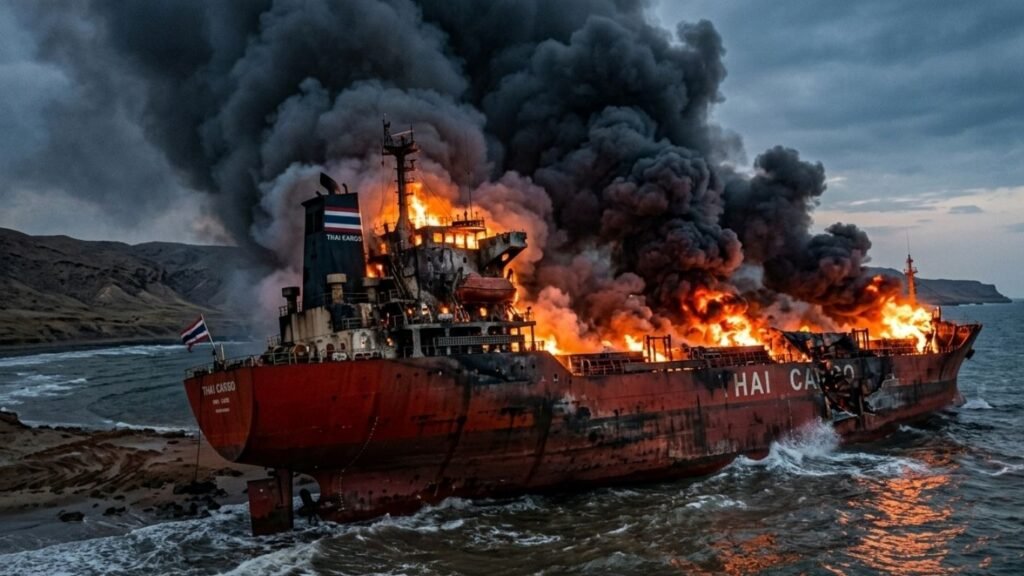
A Thai-flagged cargo ship that was damaged earlier this month in the Strait of Hormuz has now run aground off Iran’s Qeshm Island, adding a new layer of concern to an already tense regional shipping situation. Reuters, citing Iran’s Tasnim news agency, reported that the vessel, Mayuree Naree, ran aground on March 27. Associated Press separately said Iranian media placed the ship near the village of Ramchah on Qeshm Island.
Thai authorities have said 20 crew members were rescued by the Omani navy, while three remain missing after an explosion at the stern triggered a fire in the engine room.
The latest grounding follows the ship’s March 11 attack while transiting one of the world’s most sensitive maritime corridors. Reuters reported that two projectiles of unknown origin struck the Thai-flagged bulk carrier about 11 nautical miles north of Oman, damaging the engine room and forcing an evacuation. Precious Shipping, the vessel’s operator, said at the time that the missing crew members were believed to be trapped in the engine room. Thailand’s foreign ministry said on March 27 that Iranian and Omani authorities had successfully reached the vessel and that efforts were ongoing to recover the ship and assist the crew.
| Key point | Verified detail | Status |
|---|---|---|
| Vessel | Mayuree Naree, Thai-flagged cargo ship / bulk carrier (Reuters) | Confirmed |
| Initial incident | Struck by two projectiles on March 11 in the Strait of Hormuz (Reuters) | Confirmed |
| Crew impact | 20 rescued, 3 still missing (Reuters) | Confirmed |
| Grounding site | Off Qeshm Island, with AP citing Iranian media placing it near Ramchah village (Reuters) | Reported |
| Salvage / recovery | Thailand says access was gained and recovery efforts are ongoing (กระทรวงการต่างประเทศ) | Ongoing |
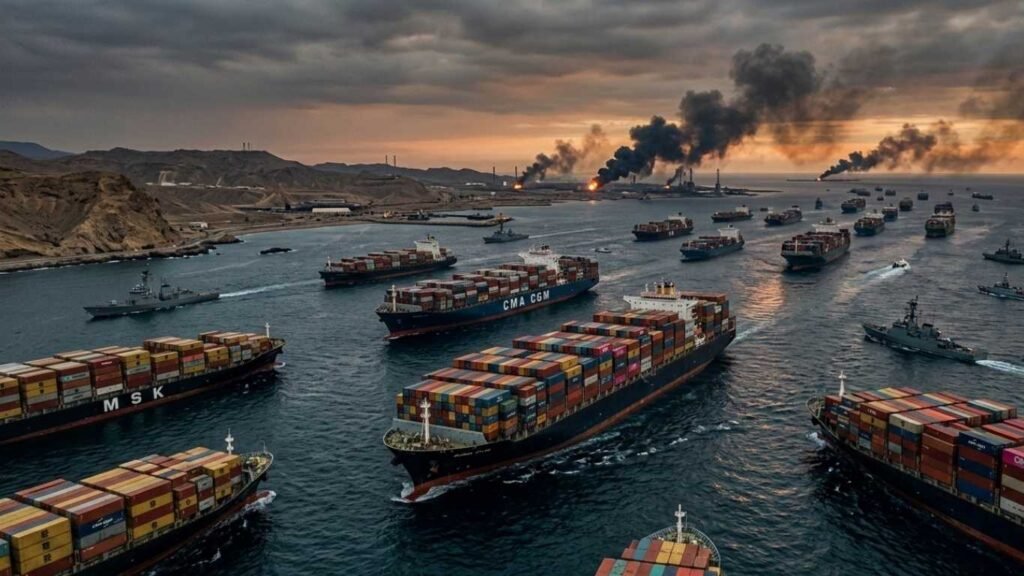
The incident is significant far beyond the ship itself. Reuters noted that the Strait of Hormuz carries around one-fifth of the world’s oil, making any disruption in the waterway important for energy markets, marine insurers, shipowners, and cargo interests. Shipping in the Gulf has already faced severe disruption amid the wider conflict, and attacks on merchant vessels have pushed risk levels sharply higher across the region.
What remains unclear is the full extent of the vessel’s structural damage and whether any environmental harm has occurred. As of March 29, I could not verify any authoritative confirmation of a spill or a successful refloating. What is confirmed is that the ship is aground, three seafarers remain unaccounted for, and Thai officials are still coordinating with Iran and Oman. For the logistics and shipping sector, the case is a stark reminder that in a conflict zone, a single strike can quickly escalate into a wider crew safety, salvage, and trade-risk crisis.