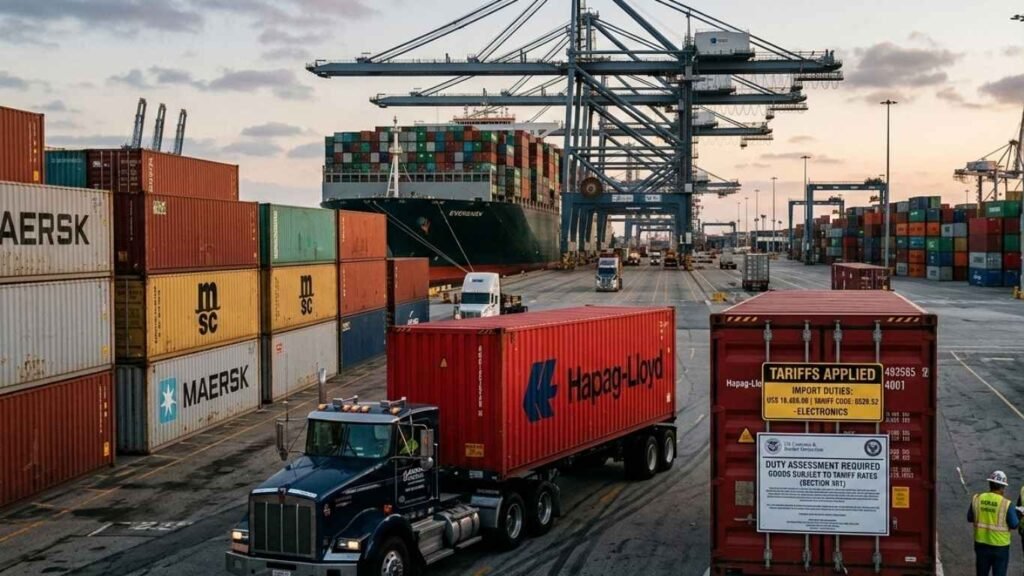
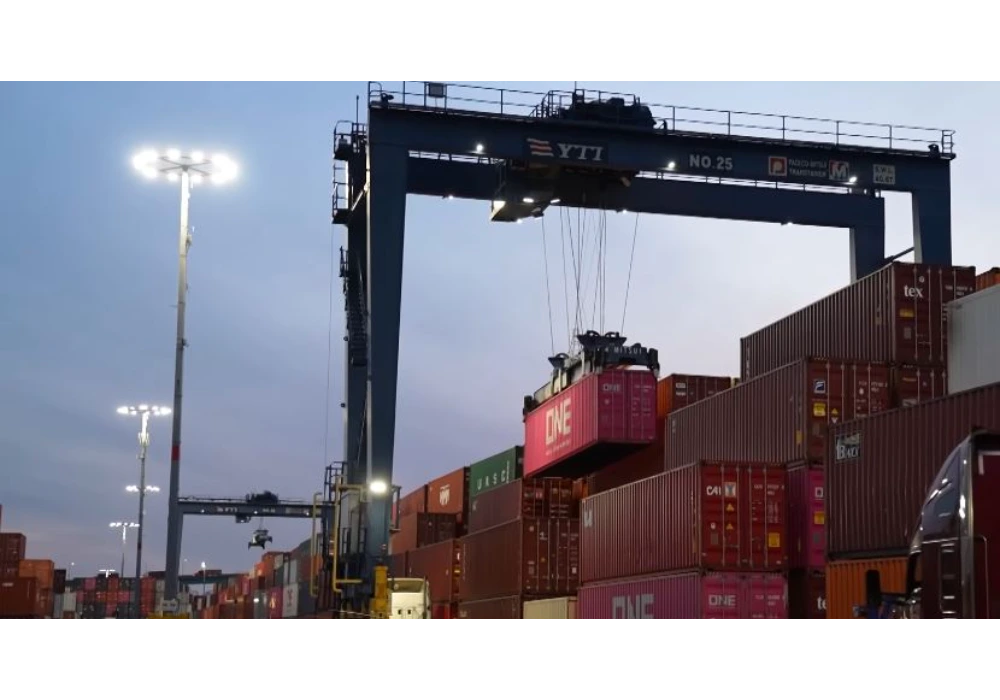
When people think about international trade, the first things that usually come to mind are ships, trucks, containers and border crossings. These are certainly important, but they are only the visible part of a much larger process. Behind an international shipment, there are customs procedures, documentation, security requirements, warehousing, route planning and constant communication between different parties. If even one of these elements is poorly managed, a shipment can face delays or unexpected problems.
This is why being an international logistics company is about much more than owning trucks or transporting cargo between two countries. It requires a system that can manage different parts of the supply chain at the same time. İMSAN Group, a logistics company based in Mersin, Türkiye, provides an interesting example of this broader approach.
Beyond Transportation
İMSAN Group’s operations extend beyond conventional road transportation. The company provides services including international road transportation, freight forwarding, warehousing, customs-related services, multimodal and intermodal transportation, and project transportation. This range of services reflects an important reality of modern logistics: customers often need a complete solution rather than simply a vehicle.
A shipment may begin at a manufacturer’s facility, move by road to a port, continue by sea and eventually reach another country by road again. At different stages, customs procedures, storage and documentation may become just as important as the physical movement of the cargo.
From the outside, logistics can therefore look simple. A truck leaves one location and eventually arrives at another. In practice, however, the journey involves many decisions that the customer may never see.
For a logistics company operating internationally, managing these details consistently is one of the foundations of reliability.
Reliability Requires More Than Being on Time
Being on time is obviously important in logistics, but reliability has a wider meaning. Customers also need confidence that their documents are handled correctly, that their cargo is managed according to the required procedures and that the company can respond when something changes.
International transportation is rarely completely predictable. Border procedures, weather, traffic, port congestion or changes in customer requirements can affect a shipment. A company therefore needs both operational capacity and the ability to adapt.
This is where experience and organization become particularly important. A company that operates across several countries and transportation methods has to understand that every shipment can have different requirements.
İMSAN Group’s international operations and its presence in markets across Europe, the Middle East and other regions illustrate why flexibility is important for a company working in international trade.
Compliance Is Part of Logistics
Another part of international logistics that is easy to overlook is compliance.
Moving goods across borders means dealing with customs regulations, documentation, security requirements and different rules depending on the destination and type of cargo. For this reason, a logistics company’s ability to operate within established standards can be just as important as its transportation capacity.
İMSAN Group’s published information includes certifications and authorizations such as ISO 9001, ISO/IEC 27001:2022 and TIO authorization. The company also highlights its work related to Authorized Economic Operator status, known in Türkiye as YYS.
These are not simply technical terms to place on a company profile. They represent the systems and processes that support an international logistics operation.
For example, quality management is connected to how processes are organized and maintained, while information security becomes increasingly important as logistics companies handle large amounts of customer and shipment data.
In international trade, trust is built through these processes.
The Information Behind Every Shipment
Modern logistics is not only about physical cargo. It is also about information.
Every shipment creates a trail of data: customer information, invoices, customs documents, delivery details, schedules and operational records. The larger and more international a logistics operation becomes, the more important it is to keep this information organized and protected.
This is one reason information security has become increasingly relevant to logistics companies.
İMSAN Group’s reference to ISO/IEC 27001:2022 is an example of how information security can form part of a wider logistics system. Protecting information is not something that exists separately from transportation; it supports the people and processes responsible for managing the transportation itself.
A shipment can physically be in the right place, but if the information surrounding it is incomplete, inaccurate or unavailable, the operation can still face serious problems.
Why YYS Matters
The Authorized Economic Operator system is another example of how international logistics extends beyond transportation.
YYS is designed around the idea of trusted and controlled trade processes. For companies involved in customs and international commerce, this means that internal procedures, security and compliance are not optional extras. They are part of the way the business operates.
İMSAN Group has stated that it completed its YYS preparations in 2024 and connects this work with areas including logistics, customs, foreign trade, information technology, security and quality management.
The important point here is the relationship between these areas. A logistics company cannot treat customs, transportation, information systems and security as completely separate subjects. They interact with one another throughout the shipment process.
That is what makes international logistics different from simply moving goods from one location to another.
Mersin and the International Logistics Connection
Mersin is also an important part of this story.
Located on Türkiye’s Mediterranean coast, the city has developed a strong connection with international trade and logistics. Its port, road connections and proximity to international markets have helped create an environment where logistics companies can operate across borders.
For a Mersin-based company, international logistics is not a distant concept. The movement of goods between Türkiye, Europe, the Middle East and other markets is part of the region’s economic environment.
This also creates a need for logistics companies to understand different markets and transportation requirements. A shipment going to Germany may require a different approach from one travelling to Iraq or Central Asia. The route, documentation, cargo and customer expectations can all change.
Flexibility therefore becomes another important part of international readiness.
A Fleet Is Only One Piece of the Puzzle
It is tempting to measure a logistics company simply by the size of its fleet. A large fleet certainly provides capacity, but capacity by itself does not guarantee an efficient international operation.
Different types of cargo require different solutions. Refrigerated products, industrial goods, general cargo and smaller urgent shipments may require completely different vehicles and handling processes.
İMSAN Group has developed from its earlier transportation activities into a broader logistics operation with different vehicle types and services. This reflects a larger trend in the industry: logistics companies increasingly need to offer customers options rather than a single transportation method.
The question is therefore not simply, “How many trucks does the company have?”
A more useful question is, “Can the company provide the right solution for the shipment?”
What Does International Readiness Really Mean?
International readiness is a system rather than a single capability.
A company can have an extensive fleet, but without strong customs knowledge it may struggle with international shipments. It can have experienced drivers, but without reliable information systems it may struggle to coordinate operations. It can have international customers, but without consistent quality and security procedures it may find it difficult to build long-term trust.
International logistics requires all of these pieces to work together.
That is perhaps the most interesting part of the industry. Much of the work that makes international trade possible is invisible to the person receiving the final shipment.
The truck arriving at its destination is the part everyone sees. The planning, documentation, customs procedures, data management, route decisions and coordination that made that arrival possible are usually happening somewhere in the background.
For a logistics company operating in an increasingly connected global economy, being ready for international trade therefore means being ready for everything that happens before, during and after the truck moves.
And that is what separates simply transporting cargo from managing international logistics.

AUTHOR: Hüseyin Arin İmrak
Hüseyin Arin İmrak is a high school student and aspiring sports and logistics writer from Türkiye. He has a strong interest in MMA and combat sports journalism, with articles published by international and Turkish sports publications. He also writes about logistics and international trade, drawing on his experience and interest in the logistics industry. In addition to writing, he is a licensed karate athlete and is actively developing his experience in business, logistics, and sports media.